Author: Jinhao Wang, Chief Structural Engineer & Technical Director
I'm Jinhao Wang. I've spent 18 years in modular construction and overseen more than 300 site-based projects, both inside China and overseas. My design approach centres on safety and climate suitability. Most of what I actually rely on came from standing on project sites, not from drawings.
This article reflects field experience from projects delivered by our team.
Site Constraints That Shape Rural Medical Projects
Rural projects carry site constraints that shape the build method. Brick-built clinics come with a normal set of prerequisites: long construction timelines, significant on-site labour and properly prepared concrete foundations. In many rural regions, securing those inputs turns into a logistics question before a technical one. That gap is where the prefab modular temporary clinic building earns its place in grassroots healthcare delivery. Built to relevant standards, a fireproof modular clinic for emergency medical service covers patient isolation, triage and flexible capacity during public-health surges.
How Long Does It Take to Build a Modular Clinic?
Teams planning rural healthcare infrastructure ask me this question within the first ten minutes. There is no one-size-fits-all answer. Site conditions write the schedule. So rather than quote a range, I'll walk through one job where those conditions decided the outcome.
Three Days at a Township Health Center in Dezhou
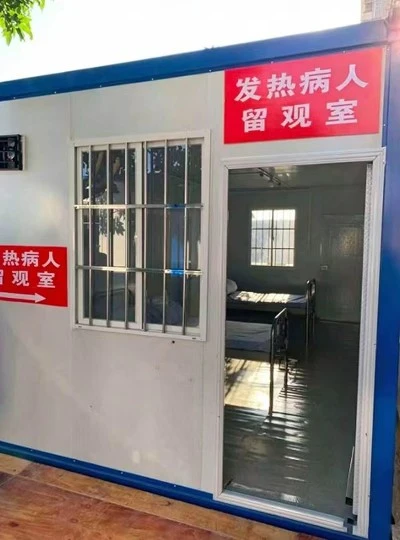
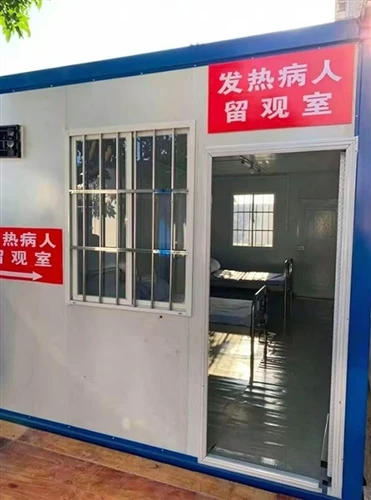
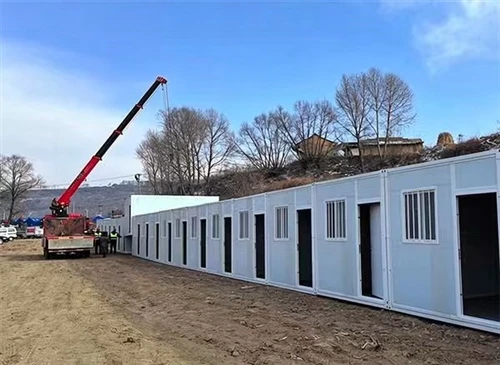
December 2022. Xiangzhao Town Health Center, a rural township facility in Xiajin County, Dezhou, Shandong. Patient volumes had risen sharply. The facility needed a standalone fever unit physically separated from general patient workflows. We had that container-based modular clinic fully operational in three days. Those three days were mostly spent working around site conditions.
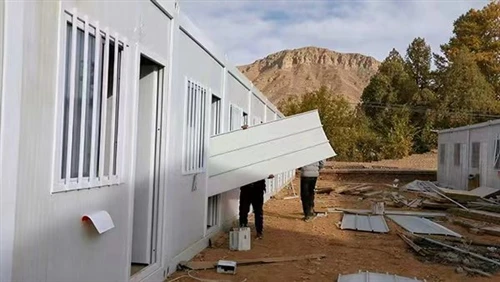
Lay-down space inside the hospital grounds was tight. Our allocated plot sat tucked in the rear corner. Rural northwest Shandong in deep winter means overnight lows near -12 °C and gusts at force 6-7 under an official blue wind warning. During my survey I found loose, poorly compacted backfill beneath the frozen topsoil. A module placed on that would settle differentially, shift the unit, strain medical piping and compromise joint seals. I had the crew excavate the weak zones, backfill with gravel and compact in layers before any hoisting.
Wind nearly stopped the lift. Once airborne, the container swung noticeably and I halted the operation. We attached two diagonal restraint ropes to opposite corners, with site crew holding tension to dampen movement, and only lowered the unit during short lulls between gusts. After touchdown I worked with field technicians, fine-tuning adjustable steel shims and re-checking level alignment, which matters for reliable medical pipe connections.
Cold brought a second constraint. Standard sealant cured very slowly at those temperatures, and joints sealed late in the day would stay vulnerable to drafts and water ingress. I coordinated a re-sequenced work order: all frame and window sealing moved into the narrow mid-day temperature peak, with temporary covers fitted afterwards and curing time extended.
Cable routing needed its own solution. The power run crossed a heavily-used pedestrian walkway inside an active hospital campus. Cutting paving would disrupt patient care, and overhead cabling would create trip hazards. We ran the cables in heavy-duty PVC conduits inside shallow surface grooves, then plated the grooves with steel to keep foot traffic moving.
Commissioning closed on 16 December. Teams ran electrical safety checks, ventilation cycles and medical oxygen pressure validation; hospital representatives and our team signed joint acceptance. The unit went straight into fever-care service. When peak urgent demand subsided, targeted retrofits turned it into on-call staff quarters, which is the flexibility modular construction buys a rural facility with shifting priorities.
Adapting This Rural Clinic Framework for Other Global Settings
The core site logic we tested and refined on this Dezhou rural build transfers well to comparable rural healthcare scenarios elsewhere. One such scenario we evaluate regularly is a modular clinic for rural Africa medical project. Many rural African sites lack pre-cast concrete foundations. Skilled local construction labour varies in availability, and sites cycle between extreme heat and heavy seasonal rainfall. Our universal load-bearing base absorbs that first barrier: modules sit directly on compacted gravel or stable native subsoil. Factory pre-routed plumbing and electrical conduits cut extensive on-site modification, and purpose-specified wall assemblies hold up under tropical climatic stress.
Heat cycling deserves as much attention as load. Panels that behave in Shandong cold are not automatically right for a tropical site, so wall specifications change even though the base logic holds. Just like our Dezhou installation, these units can switch operational roles, supporting outbreak triage in one phase and routine primary-care consultation in another.
What These Buildings Do, and What They Do Not
These facilities are engineered for long-term rural deployment, with service life expectations set at the design stage. Hot-dip galvanized steel frames, fire-rated panel systems and purpose-built medical pipework support sustained grassroots healthcare services. Expanding township-scale capacity in rural northern China, answering sudden local health-system pressure, or rolling out modular clinics for rural healthcare initiatives across Africa: prefab modular systems balance speed, safety and post-crisis adaptability.
Modular building solutions described address building-construction requirements only. Compliance with local national health-care codes, medical-device standards and local regulatory approvals remain the responsibility of local project stakeholders.
One caveat worth stating plainly. Drawings set out design intent; real-world performance gets proven in the field. I still visit rural sites routinely for exactly that reason.
Reach out to our engineering team to discuss requirements for your rural modular healthcare facility.