Jinhao Wang, Chief Structural Engineer & Technical Director. Licensed Structural Engineer, eighteen years in prefabricated modular construction, eight utility patents for expandable modular structures, and over 300 completed projects across domestic and overseas markets.
Two Requirements That Decide Every Approval
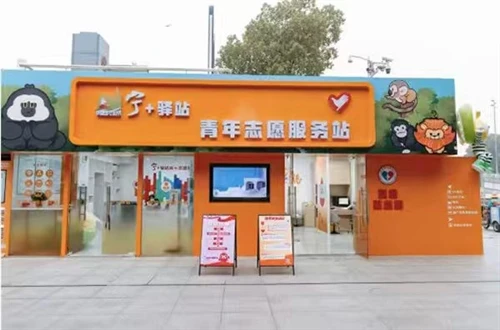
Most people only see finished modular medical units sitting neatly in public plazas. Few see the coordination behind them. Every build rests on two non-negotiable pillars: fire safety, and surfaces built for repeated medical-grade disinfection. Get either wrong and it stops behaving like a medical facility. Even with sound drawings, projects hit site trouble when one of the two is under-specified.
One client asked whether a prefab medical emergency clinic could operate in a high-footfall railway plaza without demolishing existing ground surfaces. Fair question, and not one a datasheet settles. The clearest worked example I can point to is a blood-donation unit in Nanjing. Launched December 20, 2025 on the station's North Square, it serves as Jiangsu Blood Center's 19th fixed donation outlet - real proof of fire-compliant, sanitation-focused modular design inside a busy transport hub.
Disclosure: I work within the modular construction industry, and my employer manufactures comparable modular building units. The views below reflect structural design and site-commissioning experience, not an independent third-party assessment.
Nanjing Station North Square: A Live Test Case

I reviewed site constraints early. The location sits on finished hard paving, so excavating footings or laying masonry was off the table. Extended site hoardings would bottleneck thousands of daily passengers, which ruled out conventional on-site construction.
We fabricated the full unit in our own workshop, where the fire-rated envelope was settled before delivery: frame welded, squared, corrosion-protected, then clad with insulated sandwich panels. Crews lifted and set it in narrow low-occupancy windows, levelled it on adjustable pads, anchored it to existing paving, then connected power and data before commissioning. No heavy civil work touched the plaza.
WS/T 401-2023 Zoning and Factory-Embedded Services


Internal layout complies with WS/T 401-2023, the industry standard for blood-donation premises. I defined zones for registration and consultation, pre-donation screening, blood collection, donor rest, plus secured storage for blood stock and consumables. For this disinfectable portable modular medical clinic, heating, ventilation, disinfection fixtures, CCTV and backup power were all integrated during factory production. I remind teams that retrofitting such services later carries real risk: penetrating the vapour barrier to mount disinfection hardware can introduce hidden air infiltration and moisture build-up, compromising both sanitary performance and fire-enclosure integrity.
Surface Details That Survive Daily Disinfection
I specify seamless, low-joint finishes with rounded internal corners. From site observations, disinfectant residue and organic debris accumulate steadily inside sharp crevices under day-to-day clinical use. These are functional choices for medical operation, not cosmetic tweaks.
Fire Rating: What Actually Drives the Specification
What fire rating is required for public modular buildings?
From dozens of on-site assessments, my framework prioritises fire-rated enclosure assemblies. Hot-dip-galvanised non-combustible steel forms the primary frame. Wall and ceiling panels must achieve Class-A performance - GB 8624 A for mainland China, EN 13501-1 A2-s1,d0 for Europe, ASTM E84 Class A for North America. Counter-intuitively, the steel frame rarely carries the main hazard. Most risk sits in what clinics store: alcohol-based wipes, paper supplies, upholstered seating, whose fire ratings are easy to overlook during specification. Galvanising also buys durability; thin decorative coatings typically show corrosion within five to six years outdoors, while hot-dip galvanising underpins our 25+ year target.
What Portable Modular Units Actually Deliver
With fire and disinfection performance in view, let's examine the practical advantages of portable modular medical facility, in the order they actually matter on site.
Deployment Speed
Speed is the benefit most people misread. The real gain comes from finishing fire-safety verifications, sanitary finish inspections, electrical rough-ins and envelope sealing under controlled factory conditions. At Nanjing, site work was limited to lifting, levelling and utility hook-ups - hours rather than multiple months.
Relocatability
If plaza layouts at Nanjing Railway Station are reconfigured in future, this fully fire-rated, sanitation-optimised unit can be crane-lifted and redeployed elsewhere, protecting the capital invested in its medical-grade build.
Foundation-Free Siting
Our universal load-bearing base removes the need for cast-in-place footings. It sits stable over paving, gravel or compacted topsoil - which made this fire-safe, hygiene-focused installation feasible on constrained transit-hub pavement.
Where Projects Actually Fail
Even with sound factory quality, field problems still emerge. I recall a blood-centre project in Beijing, where crews ran 98 metres of cabling and finished power connections late into the night because site capacity had not been fully mapped pre-delivery. Unverified capacity, unmapped underground services, wind limits during lifting, small levelling discrepancies - each can frustrate commissioning of fire and sanitation systems. Factory test reports never substitute for site surveys.
Four Pre-Shipment Checks
So I enforce four checks before a unit ships: validate on-site power capacity and cable routing; resurvey ground elevations; run full factory functional tests for HVAC, disinfection hardware and digital systems; obtain clinical stakeholder sign-off on partition and privacy layouts.
Fire resistance and disinfectant-compatible surfaces are not premium add-ons. Based on my field experience, they are intertwined baseline requirements for any modular medical building open to the public.
Limits, Compliance, and the Scope of This Article
Expectations matter. These are semi-permanent modular assets, not full-service hospitals. Repeated contact with high-strength disinfectants will gradually degrade many common surface materials. Manufacturer test certificates never replace formal local regulatory approval for fire safety and medical-space compliance.
This article records engineering design and site-commissioning experience. It is not legal, regulatory or clinical advice, and it does not constitute a compliance basis for any jurisdiction, code edition or specific project. Fire ratings, sanitary approvals and healthcare licensing requirements differ between countries, regions and local authorities. Verify the current edition of the applicable standard and confirm interpretation with the authority having jurisdiction before design freeze, procurement or site works.